





Meat Processing Companies Investigation Signals Increased Scrutiny of U.S. Beef Industry Consolidation
For many American cattle producers, the economics of the beef industry have become difficult to reconcile.
As consumers continue paying historically high prices at the grocery store, many ranchers remain squeezed by rising input costs, volatile markets, and tightening operational margins. Those frustrations have intensified concerns surrounding consolidation within the U.S. beef supply chain, where a small number of meat processing companies control a significant share of processing capacity and market access.
The U.S. Department of Justice’s (DOJ) criminal antitrust investigation into major beef processors is bringing renewed attention to long-standing questions surrounding competition, transparency, and fairness within the cattle industry.
For many ranchers, the issue is larger than a single investigation. It is about the long-term sustainability of domestic beef production and whether independent producers can continue operating and growing in an increasingly consolidated marketplace.
At AgAmerica, we understand that U.S. cattle producers need confidence in a fair marketplace before they can responsibly reinvest in herd expansion, land acquisition, infrastructure, and the future of multi-generational operations.
We’re closely monitoring developments surrounding this investigation and its potential implications for future financial decisions facing cattle producers. Here’s what we know so far.
Why Is the DOJ Investigating Meat Processing Companies?
The DOJ’s criminal antitrust investigation marks one of the most serious federal actions taken against the beef processing industry in recent years. Of course, concerns surrounding beef industry consolidation are not new.
Following pandemic-era supply chain disruptions and sharp increases in retail beef prices, lawmakers renewed calls for reforms aimed at strengthening cattle market transparency and improving competition within the packing sector. Conversations surrounding the Packers and Stockyards Act, mandatory cash trade legislation, and regional processing capacity expansion all stemmed from broader frustration over limited competition among dominant packers.
Scrutiny of meat industry consolidation also intensified following the DOJ’s recent settlement with Agri Stats, a data analytics company serving meat processors and poultry integrators. Regulators alleged that the company’s detailed competitor data reporting systems may have enabled anti-competitive coordination among participating companies.
Unlike prior policy discussions or civil reviews, a criminal antitrust probe suggests regulators believe there may be evidence of unlawful anti-competitive conduct warranting a more aggressive investigation.
According to reports, the DOJ is examining potential market manipulation, anti-competitive behavior, and information-sharing practices among major beef processors. The investigation comes after years of pressure from producer groups, lawmakers, and industry stakeholders who have questioned whether consolidation within the meatpacking sector has weakened competition and distorted price discovery for cattle producers.
Many previous efforts to address consolidation of meat processing companies focused primarily on legislative reform or regulatory oversight. This latest DOJ action is a formal criminal investigation into the conduct of major meat processing companies.
Market Concentration Concerns in U.S. Meat Processing Companies
As many in the industry already know, four companies dominate the majority of domestic meat and processing capacity.
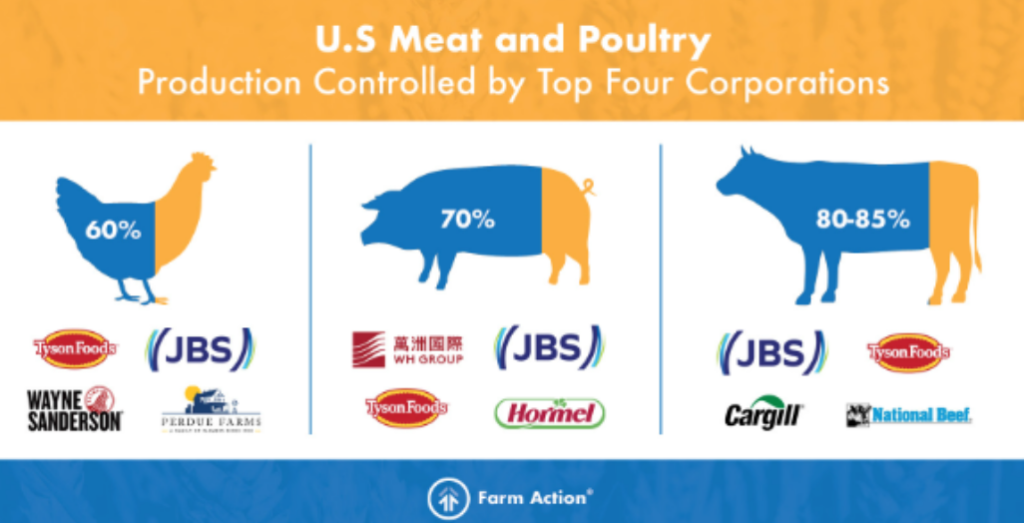
This level of market concentration in meat processing companies raises concerns about competition, producer negotiating power, and long-term market access for America’s cattle producers.
Lack of Competition and Pricing Power
When only a small number of buyers control regional processing capacity, producers often have fewer marketing options and less leverage when negotiating cattle prices. Limited competition can weaken price discovery mechanisms and contribute to widening spreads between retail beef prices and the prices paid to ranchers.
Foreign Ownership of Major Meat Processors
Questions surrounding foreign ownership have also become part of the broader discussion. JBS and National Beef have ties to Brazilian ownership, while Smithfield Foods (one of the nation’s largest pork processors) is owned by China-based WH Group. While foreign ownership alone does not automatically indicate unfair practices, some producers and policymakers argue that consolidation combined with international ownership creates concerns surrounding food security, supply chain resilience, and domestic market control.
Vulnerability to Supply Chain Disruption
Limited regional processing access can also create logistical challenges, particularly during periods of supply chain disruption or market volatility. For independent producers, these conditions can impact their ability to expand herds, purchase land, invest in infrastructure improvements, or effectively plan for succession.
“The long-term solution for rebalancing domestic beef production with domestic beef demand is to incentivize the expansion of the domestic cattle herd, which will only occur if America’s cattle farmers and ranchers have confidence that their prices will not be continually manipulated by dominant beef packers or continually undercut by excessive imports.”
– Bill Bullard, R-CALF
What’s Next in Addressing Meat Processing Companies
The DOJ investigation remains in its early stages, and formal conclusions or enforcement actions will likely take time to develop.
Potential developments that could result from this investigation include:
- Additional lawsuits or enforcement actions
- Expanded antitrust oversight
- Increased transparency requirements
- Further examination of pricing and reporting practices
- Resources to promote processing capacity and diversification
For many producers, this investigation represents a test of whether policymakers and regulators are willing to address long-standing concerns surrounding beef industry consolidation and cattle market competition.
Strengthen Your Operation with a Lender Who Cares
Regardless of how the DOJ investigation unfolds, cattle producers still face the day-to-day realities of managing risk, preserving liquidity, and positioning their operations for long-term resilience.
Market uncertainty reinforces the importance of maintaining financial flexibility and developing operational strategies that can adapt to changing economic conditions.
Whether producers are evaluating herd expansion opportunities, considering land acquisitions, or preparing for generational transitions, access to customized financing solutions can play a critical role in preserving stability while supporting future growth.
AgAmerica understands the economic pressures facing today’s cattle producers and the importance of financing solutions designed specifically for agriculture. Many of our experts are in the cattle industry themselves and are passionate about creating flexible loan structures that help producers preserve working capital, strengthen operational liquidity, and navigate uncertain markets while positioning operations for long-term success.
Our custom financing solutions include:
- Agricultural land loans
- Interest-only financing structures
- Farm expansion financing
- Operational liquidity solutions
- Succession planning support
Whether you’re preserving working capital, expanding your operation, or positioning your ranch for long-term resilience, contact our team today to learn how AgAmerica can help.